By Dakota Murphey
A category hiding in plain sight
Walk the frontage aisle of most garden centres and it still reads as an afterthought, with a few hanging baskets, a rack of solar lights and maybe a bay of gravel by the tills. Yet the front of a property is where a customer’s own first impression of their home is formed every single day, and it is rarely treated as a retail category with a proper plan behind it. That is starting to look like a missed opportunity rather than a quirk of merchandising. The products that make up a good frontage, hard landscaping, planting, finishing touches and increasingly technology, are usually ranged and sold separately. What is missing is the idea that they belong together as one buying decision, not a scatter of unrelated SKUs picked up on separate trips.
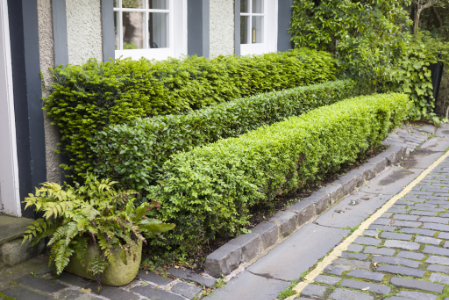
Why the front garden can’t stay an afterthought
The scale of the opportunity is bigger than most ranging decisions currently reflect. Garden Trade Specialist’s own look at the trends shaping 2027 named climate-change gardening and smart gardening among the strands set to matter most next year, and both have clear implications for the front of the house. The RHS’s inaugural State of Gardening Report gives that trend some weight. It found that 55% of front garden space in the UK is paved over, and the charity ties paving to a reduced ability to cool and to more severe flooding, recommending robust planting and permeable paving for front garden driveways. That puts permeable paving and climate-resilient hard landscaping on course to move from a specialist interest to a mainstream one. Gravel, decorative aggregates and porous paving systems are stock most centres already carry, so the opening lies in presenting what is already on site as part of a coordinated frontage range, rather than leaving it to sit in a different bay to the planters.
Selling the look, not the product
Nobody builds a frontage from a blank sheet. The customer arrives with fixed points already in place, from the brickwork or render and the roofline to the front door and, on many homes, a garage door that takes up a good share of the elevation. Every planter, bag of aggregate or house sign they buy has to sit with those, which is why frontage purchases tend to stall when a range is merchandised by product type rather than by look. That puts colour at the centre of the category. A customer with a dark grey door and pale render is asking a different question from one with warm brick and a timber entrance, and the answer is rarely a single matching item. It takes a set of choices that work together, from a planter glaze to a gravel tone to a sign finish. Centres that group the range into a handful of colour stories, such as warm neutrals, soft greys and deep greens, make that decision far easier to take on the shop floor.
The people who supply those fixed features see the same pattern. Wessex Garage Doors’ guidance on matching a garage door to the front door and home exterior makes the point that the two don’t need to be identical, and that complementary shades and wood effects can work just as well, as long as the choice takes in the brickwork, render and other colours already on the exterior. A frontage range works best on the same logic, coordinating the pieces rather than copying one colour across them.
In practice, that comes down to a few simple prompts on the shop floor. Asking what colour the front door is, or what the house is built from, is often enough to point a customer to the right planters and gravel in a single conversation.
The finishing touches still earn their place
None of this makes the simpler end of the category redundant. Planters remain one of the easiest upsells in the frontage range, not least because they let a customer refresh the look seasonally without touching anything structural, and a well-chosen set does more for a property’s kerb appeal than most buyers expect from something so easy to swap out.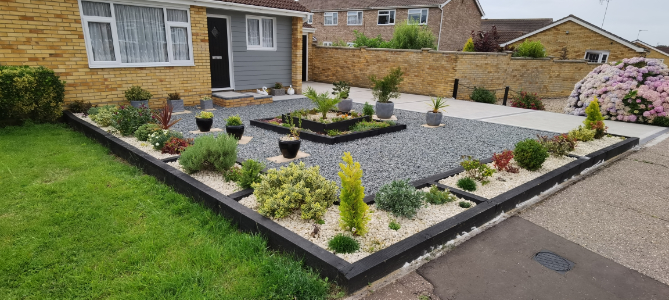
House signage sits in the same bracket. It is a small purchase, but it is also one of the few frontage products a customer sees every single day, which makes it a natural place to introduce colour and material choices that tie back to the rest of the scheme. Smart access products, from video doorbells to keypad entry, fit the same pattern, since they sit on or beside the front door and are easier to choose once the colour story is settled.
Displayed together, these lines also give staff an easy conversation starter. A customer who comes in for a pair of planters can be shown the gravel, the signage and the entry hardware that sit naturally with them, which turns a single-item visit into a planned frontage basket. That is where the category starts to pay back the floor space it takes up.
Planning for 2027 ranges
The commercial case for treating gardens as a category buyers plan for is already being made at industry level. The HTA’s Value of Gardens report estimates that building gardens alongside the government’s planned 1.5 million new homes could unlock £64.7 billion in consumer spending over the next century.
A similar case has been made for premium pools as an emerging opportunity for garden centre buyers, and the principle carries over. Once a category is reframed as something buyers actively plan for, rather than something that happens to be in stock, the sales tend to follow.
For centres building their 2027 plans now, with trade shows such as Glee Birmingham and the Four Oaks Trade Show on the horizon, treating kerb appeal as a single range, spanning hard landscaping, smart access and the planters and signage that finish the look, is a more useful starting point than ordering each element separately.